*Price and availability are accurate at the time of publishing. Verified by Property Specialists.
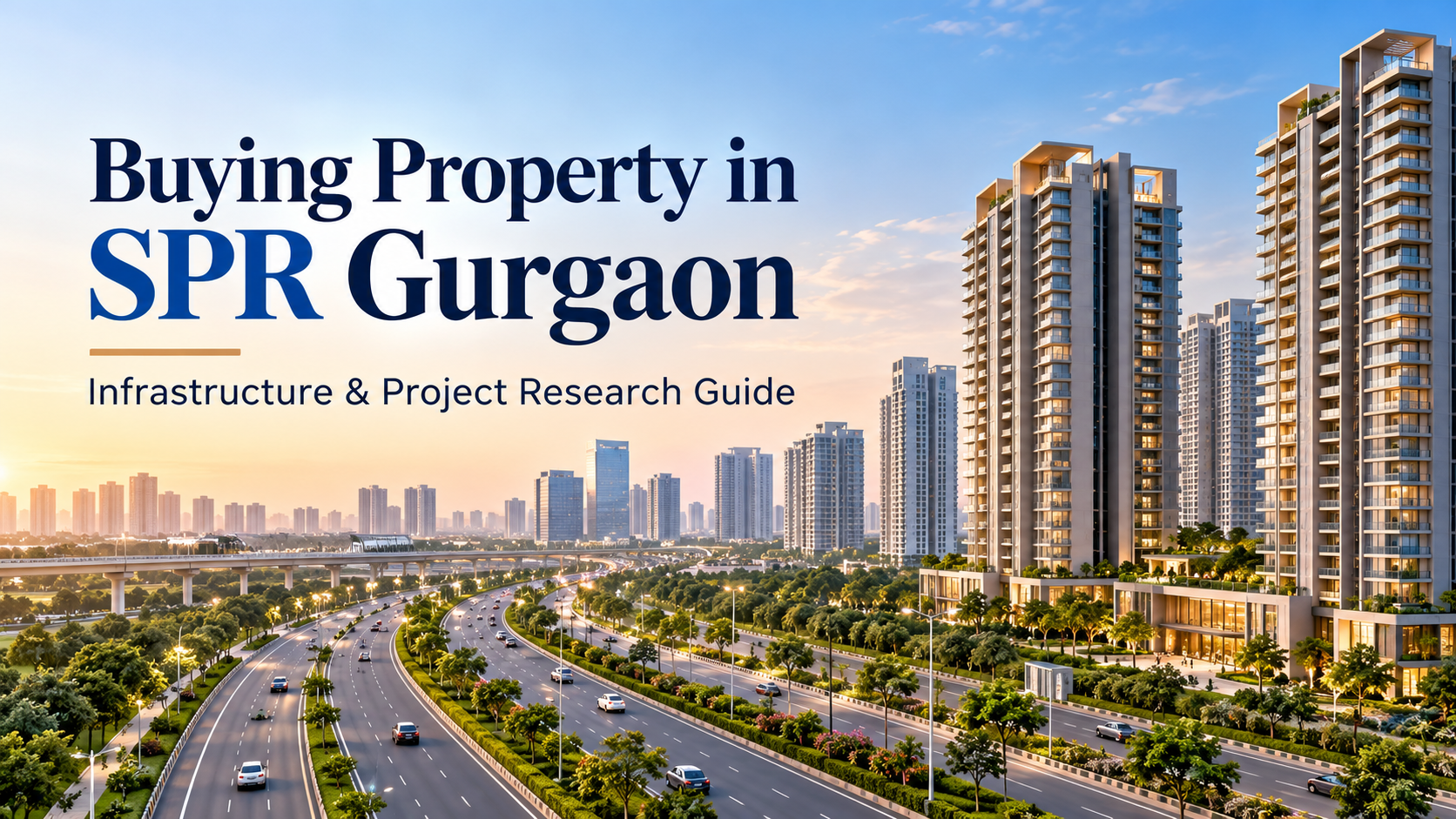
Gurgaon has developed into one of the most prominent residential and commercial real estate markets in the National Capital Region. Over the years, infrastructure expansion, corporate growth, improved road networks and the development of new residential corridors have created multiple options for homebuyers. Among these emerging locations, Southern Peripheral Road, commonly known as SPR Gurgaon, has gained considerable attention from buyers researching modern residential developments.
SPR connects important parts of Gurgaon and provides access to several established and developing sectors. For a buyer, however, choosing a property in this corridor should involve much more than looking at attractive advertisements, apartment specifications or launch offers. Infrastructure status, road connectivity, developer background, project approvals, construction progress, neighbourhood development and long-term suitability should all form part of the research process.
Buyers exploring New Projects in SPR Gurgaon should therefore compare available options systematically before making a booking decision. This guide explains the major factors that can help buyers understand SPR Gurgaon, evaluate projects and conduct more informed property research.
Understanding the SPR Gurgaon Residential Corridor
Southern Peripheral Road is an important road corridor in Gurgaon that connects different residential and commercial areas while providing access towards major roads and employment zones. Its location has contributed to residential development across several surrounding sectors.
Unlike a fully established neighbourhood where most infrastructure is already operational, developing corridors can change considerably over time. New roads, commercial developments, residential communities, schools, healthcare facilities and retail destinations may gradually influence the overall living environment.
This makes property research particularly important.
A project may appear attractive because of its location on a map, but buyers should understand the actual approach road, surrounding development, traffic conditions and distance from everyday facilities. Similarly, proposed infrastructure should not automatically be treated as completed infrastructure.
The objective should be to understand both the current condition of the location and its possible future development.
Why Homebuyers Are Researching SPR Gurgaon
One of the main reasons buyers consider SPR is its position within Gurgaon’s broader development network. The corridor provides access to multiple sectors and connects with important routes used for commuting across Gurgaon and towards other NCR locations.
Another factor is the availability of newer residential developments. Buyers who prefer contemporary apartment layouts, planned communities, clubhouses, landscaped spaces and modern amenities may find multiple projects to research in and around the SPR belt.
The corridor may attract different categories of buyers, including end users searching for a primary residence, families planning to upgrade from an older property and investors studying developing Gurgaon locations.
However, every buyer has different priorities. A location suitable for an investor may not necessarily be the best option for a family requiring a school nearby. Similarly, a project that suits someone working in one business district may involve a difficult daily commute for another buyer.
Therefore, SPR should be evaluated according to individual requirements rather than only general market popularity.
Start Your Research With the Exact Project Location
Location is one of the most important aspects of property evaluation, but buyers should go beyond the sector number mentioned in a brochure.
Start by identifying the exact project entrance on a map. Check which road provides direct access to the site and whether the approach road is operational. A project may be located near an important road geographically while its actual entrance requires a longer route.
Visit the location if possible.
During the site visit, observe road width, traffic conditions, nearby construction, public transport availability and surrounding residential development. Visit at different times of the day if the project is being considered for self-use.
Morning and evening traffic can provide a more realistic understanding of commuting conditions than a weekend afternoon visit.
Buyers should also calculate practical travel distances to workplaces, schools, hospitals, shopping areas and other destinations used regularly.
Evaluate Connectivity Instead of Depending on Distance Claims
Real estate marketing often highlights distances from major landmarks. These figures can be useful as an initial reference, but buyers should verify them independently.
There is an important difference between straight-line distance and actual driving distance.
A destination described as being only a few kilometres away may require a longer journey because of road design, traffic signals, service lanes or access restrictions.
When comparing SPR projects, check connectivity towards major employment areas and important Gurgaon roads. Also examine how easily the project connects with established neighbourhoods.
For buyers who travel frequently to Delhi or other NCR cities, access towards major regional roads can be an important consideration.
The most useful approach is to create a personal connectivity checklist based on destinations that actually matter to your household.
Study Existing and Proposed Infrastructure Separately
Infrastructure can significantly influence the development of a residential corridor. However, buyers should clearly separate infrastructure that is already operational from projects that are proposed, planned or under construction.
Operational infrastructure can be physically inspected and its impact can be evaluated immediately.
Future infrastructure involves uncertainty related to timelines, execution and final configuration.
When a property presentation highlights a proposed road, metro connection, commercial hub or public infrastructure project, buyers should verify its official status from reliable sources wherever possible.
Avoid making a high-value property decision entirely dependent on a future infrastructure promise.
A project should ideally make sense based on its present location and current accessibility, while future infrastructure should be treated as an additional potential benefit rather than the only reason for purchase.
Compare Residential Projects on Common Parameters
Comparing projects becomes difficult when each developer presents information differently. One project may highlight its clubhouse, another may focus on landscaping and another may emphasise apartment size.
A better approach is to create a standard comparison framework.
For every shortlisted development, record the project location, developer, land area, number of towers, apartment configurations, unit sizes, possession timeline, construction status, approvals, parking arrangements, maintenance expectations and available amenities.
Also compare the density of the development.
Two projects with similar land areas can offer very different living experiences depending on the number of apartments and towers planned within them.
Buyers should consider usable living space, tower placement, open areas, circulation and community planning rather than judging projects only by headline specifications.
Understand Apartment Configuration and Usable Space
A larger advertised area does not automatically mean better usable space.
When comparing apartments, buyers should study the floor plan carefully. Look at room dimensions, balcony sizes, passage areas, kitchen layout, utility space, storage possibilities and placement of doors and windows.
Think about how furniture would actually fit inside the apartment.
For families, practical considerations such as wardrobe space, study areas, kitchen storage and privacy between bedrooms can matter more than decorative features shown in sample apartments.
Also understand the terminology used for apartment area.
Ask the sales team to explain the relevant area calculations and check the documents provided for the project. Buyers should know what they are paying for and how the apartment dimensions correspond with the quoted area.
Research the Developer Before Booking
The developer’s background deserves independent research.
Review previously delivered projects where possible. Examine construction quality, maintenance condition, common areas and feedback from existing residents. A completed development can often provide useful insight into how a developer’s projects perform after possession.
Buyers should also study whether previous projects were delivered according to expected timelines, while recognising that circumstances can differ between developments.
The objective is not simply to select the biggest brand name. It is to understand the developer’s execution history and whether the specific project being considered appears appropriately planned and documented.
Verify RERA and Important Project Documents
Regulatory and legal verification is a crucial part of property research.
Before making a substantial payment, buyers should check the project’s applicable RERA information and review available project details. The information may include registration details, promoter information, project plans and declared timelines.
The details presented by the sales team should be compared with relevant official documents.
Buyers should also request important documents applicable to the transaction and consider obtaining independent legal advice before signing an agreement.
Marketing brochures are useful for understanding the project’s positioning, but legal rights and obligations are determined by official documents and agreements rather than promotional material.
Examine the Complete Property Cost
The advertised base price should never be treated as the final acquisition cost.
Residential property purchases may involve several additional charges depending on the project and transaction structure. Buyers should request a detailed written cost sheet showing every applicable component.
The total financial calculation should include the amount payable to the developer as well as statutory and transaction-related expenses applicable to the purchase.
Buyers using a home loan should additionally calculate their down payment, loan amount, expected EMI and financial buffer.
Do not select a property solely because the starting price appears attractive.
The relevant figure is the complete amount required to acquire and eventually occupy the property.
Construction-Linked vs Other Payment Plans
Payment structure can influence the financial suitability of a project.
In an under-construction development, buyers may encounter payment schedules linked to construction milestones or other plans offered by the developer. Each structure should be studied carefully.
Understand when each instalment becomes payable and whether your available savings and loan disbursement can support the schedule.
Buyers should avoid assuming that future income increases will automatically make later payments comfortable.
A safer approach is to evaluate affordability using current financial circumstances and maintain an emergency reserve for unexpected expenses.
Any special payment scheme should also be reviewed carefully to understand its terms, eligibility requirements and financial implications.
Assess Amenities Based on Actual Usage
Modern residential developments often advertise a long list of amenities, including swimming pools, fitness centres, sports facilities, landscaped gardens, children’s areas and clubhouses.
Amenities can improve quality of life, but buyers should consider how frequently they are likely to use them.
A family with children may prioritise play areas and open spaces. Fitness-focused residents may value a gym, jogging track or sports facilities. Senior family members may benefit from accessible walking areas and comfortable community spaces.
The number of amenities is less important than their planning, accessibility and suitability for residents.
Buyers should also understand that larger amenity packages can contribute to future maintenance expenses.
Study Tower Location and Apartment Orientation
Project-level research should eventually move to tower-level and unit-level evaluation.
Two apartments within the same development may have different views, sunlight exposure, privacy and noise levels.
Check the selected tower’s position within the master plan. Understand its relationship with the entrance, clubhouse, internal roads, other towers and project boundaries.
At the apartment level, study orientation, ventilation and daylight.
Also consider whether the unit faces an internal landscape, road, neighbouring development or another tower.
Buyers should ask about the distance between towers because adequate separation can influence privacy, daylight and ventilation.
Evaluate the Surrounding Social Infrastructure
For end users, everyday convenience is a major factor.
Research nearby schools, hospitals, supermarkets, pharmacies, restaurants and other essential services. Instead of only recording their distance, check how easily they can be reached.
Families with school-going children should understand practical school commute times.
Healthcare access deserves similar attention, particularly for households with senior citizens or young children.
A developing location may currently have fewer facilities than an established neighbourhood, but buyers should evaluate whether existing options are sufficient for their requirements.
Commercial development around a residential corridor can improve convenience over time, but future development should again be treated separately from facilities that already exist.
Visit the Site Before Making a Decision
Online research is useful for creating a shortlist, but a physical site visit can reveal information that maps and brochures cannot.
Observe the surrounding environment carefully.
Look at nearby land use, ongoing construction, road conditions, noise levels and existing residential occupancy. Check whether essential shops and services are available nearby.
During the project visit, ask to understand the actual location of the proposed tower rather than evaluating only the sales gallery.
If a sample apartment is available, remember that interiors, furniture and lighting may be designed to create a particular presentation. Focus instead on dimensions, circulation and functional space.
Ask the Sales Team Specific Questions
A productive sales meeting requires specific questions.
Instead of asking whether the location has “good connectivity,” ask about the exact access route. Instead of asking whether the project has “large open space,” request the master plan and understand how that space is distributed.
Ask for written details wherever possible.
Questions can cover project approvals, possession timeline, construction status, apartment specifications, parking, maintenance, payment schedules and cancellation terms.
If an important answer is provided verbally, request supporting documentation before relying on it for a financial decision.
Compare SPR With Other Gurgaon Locations
Buyers should avoid evaluating SPR in isolation.
Gurgaon offers several established and developing residential corridors. Depending on budget, workplace and lifestyle requirements, alternative locations may also deserve consideration.
A buyer researching New Launch Projects in Gurgaon can compare SPR opportunities with developments across other Gurgaon micro-markets before creating a final shortlist.
The comparison should consider more than apartment prices.
Look at connectivity, neighbourhood maturity, available infrastructure, future supply, project quality and personal convenience.
For an end user, a slightly more expensive property that significantly reduces daily travel may provide greater practical value. An investor may evaluate the same locations differently based on development potential, demand and future competition.
Consider Future Residential Supply
Future supply can influence both the character of a neighbourhood and the property market.
A corridor experiencing substantial new development may eventually benefit from improved retail, services and infrastructure because of the growing residential population.
At the same time, a large number of similar apartments entering the market can increase competition among sellers and landlords.
Buyers should therefore research existing residential inventory, projects under construction and upcoming developments in the broader area.
This provides a more complete picture of how the location may evolve.
Investment Buyers Should Study Rental Demand
Investment decisions require different research from self-use purchases.
Investors should examine potential rental demand, nearby employment centres, tenant profiles and competing residential inventory.
A premium apartment does not automatically guarantee high rental returns.
Rental demand depends on factors such as location convenience, connectivity, project quality, maintenance and the availability of similar homes nearby.
Investors should use realistic assumptions instead of relying solely on projected rental figures.
Likewise, future property appreciation cannot be guaranteed. Real estate prices are influenced by market cycles, infrastructure, demand, supply, interest rates and broader economic conditions.
End Users Should Focus on Daily Life
Homebuyers purchasing for self-use should imagine everyday life after possession.
How long will the workplace commute take? Where will children attend school? Is healthcare easily accessible? Are grocery stores nearby? Does the apartment provide enough storage? Will elderly family members find the community comfortable?
These questions may appear simple, but they determine long-term satisfaction.
A property can have impressive specifications and still be inconvenient for a particular household.
The best project is therefore not necessarily the one with the longest amenity list or most aggressive marketing campaign. It is the project that aligns most closely with the buyer’s financial position, lifestyle and long-term requirements.
Check Construction Progress Periodically
For buyers considering an under-construction project, monitoring progress is important.
Review construction updates provided by the developer and compare progress over time. Where permitted and safe, periodic site visits may provide additional understanding.
Keep records of important communications, payment receipts and documents related to the purchase.
Organised documentation can make it easier to track payments and refer to previous correspondence when required.
Do Not Make Decisions Under Sales Pressure
Property purchases involve substantial financial commitments and should not be rushed because of limited-period marketing messages.
Offers and inventory availability can change, but buyers should still complete essential verification before paying a significant booking amount.
Understand the cancellation and refund terms before making any payment.
If a particular unit is genuinely suitable, the decision should be supported by research rather than fear of missing an offer.
Take enough time to compare projects, evaluate costs and review documents.
Create a Final Buyer Comparison Sheet
Before selecting a project, prepare a simple comparison sheet for the final shortlisted options.
Include location, connectivity, total price, apartment size, floor plan, construction status, possession timeline, developer background, amenities, maintenance expectations, approvals and nearby infrastructure.
Score each project according to personal priorities.
For example, an end user working in Gurgaon may assign greater importance to commute time and neighbourhood convenience, while an investor may focus more heavily on entry price, demand drivers and competing supply.
A structured comparison reduces the influence of marketing presentations and makes the final decision easier to explain objectively.
Final Buyer Checklist for SPR Gurgaon
Before booking a property in SPR Gurgaon, confirm the exact project location and approach road. Verify current connectivity rather than relying only on proposed infrastructure. Review RERA information and applicable project documents. Understand the complete cost instead of comparing only base prices.
Study the apartment floor plan and usable dimensions. Compare tower placement and orientation. Research the developer’s previous work. Visit the site and surrounding area personally where possible.
Also evaluate schools, hospitals, shopping and workplace connectivity according to your household’s actual needs.
For investment purchases, study rental demand and competing residential supply rather than depending on assumptions about appreciation.
Most importantly, read the booking and agreement documents carefully and seek appropriate professional advice where necessary.
Conclusion
SPR Gurgaon has become an important residential corridor for buyers exploring newer housing options in Gurgaon. Its connectivity, developing infrastructure and presence of multiple residential projects make it a location worth researching, but the final property decision should be based on detailed verification rather than broad market perception.
Buyers should study the exact location, road connectivity, project documentation, construction status, developer background, apartment planning, total cost and surrounding infrastructure before creating a shortlist.
A property purchase becomes easier to evaluate when every project is compared using the same criteria.
For end users, the priority should be long-term convenience, affordability and suitability for everyday life. For investors, demand, supply, project positioning and realistic financial expectations require closer attention.
SPR Gurgaon may offer different opportunities across projects and sectors, but no single development will be suitable for every buyer. Careful research, physical site visits, document verification and disciplined project comparison can help buyers make a more informed decision and select a property that better matches their individual objectives.

 By gudduk8989