Gurugram has changed a lot over the last decade. Office towers, gated societies and large malls now sit side by side, and a new kind of retail format is becoming popular within this mix. It is called high-street retail. Shops face an open road, customers walk in directly from the street, and brands get strong visibility. Many investors now look at this format as a steady way to earn rent and build long-term capital value.
*Price and availability are accurate at the time of publishing. Verified by Property Specialists.
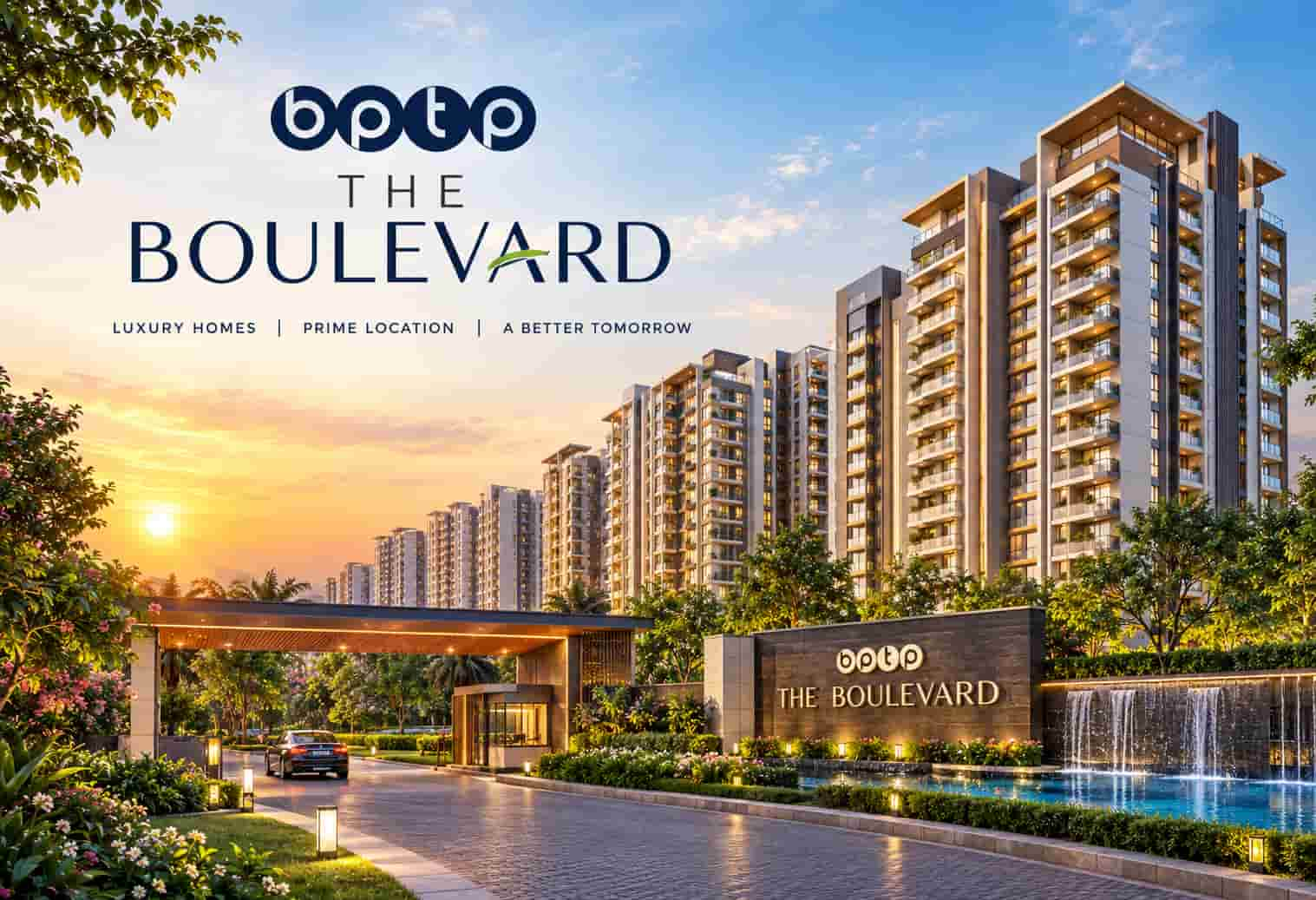
BPTP The Boulevard is a new high-street retail development in Sector 70A, Gurugram. It comes from BPTP Limited, a developer that has been active in the Delhi NCR region for many years. The project is spread across 15.5625 acres and offers 29 retail units. In this article, we will walk through the project in simple words. We will cover the location, the master plan, floor plans, amenities, price, and what a buyer should check before putting money into retail space.
Please note one thing before we begin. Some details, such as unit sizes and the starting price, have not been announced yet. We will point these out clearly instead of guessing. Wherever the information is pending, you should confirm it with the developer or an authorised channel partner.
BPTP The Boulevard at a Glance
Here is a quick snapshot of the project, so you have the basic facts in one place.
Particulars
Details
Project
BPTP The Boulevard Sector 70A Gurgaon
Location
Sector 70A, Gurugram, Haryana
Developer
BPTP Limited
Type
Commercial high-street retail development
Status
New launch
Land Area
15.5625 acres
Total Retail Units
29
Unit Sizes
Coming soon
Starting Price
On request
HRERA Registration No.
RC/REP/HARERA/GGM/1062/794/2026/34
Two points stand out right away. First, the project has a HRERA registration number, which is a good sign for transparency. Second, only 29 units are spread over a large land parcel of more than 15 acres. That ratio is unusual, and we will explain why it matters in the sections below.
What Is High-Street Retail and Why Do Investors Like It?
Before we look at the project itself, it helps to understand the format. A high-street retail property is a row or cluster of shops built along a main road or a landscaped boulevard. Unlike a mall, there is no closed building with a single entry gate. Customers can park, walk along the street, and step into any outlet.
This format has a few clear advantages. To begin with, visibility is excellent. A brand name on a high-street shop is seen by every person who drives or walks past. In addition, tenants often prefer it because the rent per square foot can be lower than a mall, while the footfall is still strong. Moreover, shop owners usually have more freedom in signage and store design.
Think about the places where people actually spend money in daily life. Cafes, salons, pharmacies, clinics, grocery stores, quick-service restaurants, fitness studios and banks all do well on a street front. These are everyday needs, so the demand does not depend on festival seasons. As a result, rental income from such tenants tends to be more stable than income from occasional-spend categories.
For an investor, this means two possible gains. The first is monthly or quarterly rent. The second is the rise in the property value over time, especially if the surrounding sector becomes more populated and better connected. Of course, neither of these is guaranteed, and we will discuss the risks later in this article.
BPTP The Boulevard Location: Sector 70A, Gurugram
Location decides almost everything in retail. A well-planned shop in the wrong place will struggle, while an average shop in a busy catchment can do well. So let us look at what BPTP The Boulevard Location offers.
Sector 70A lies in the southern part of Gurugram. This part of the city has seen steady residential growth in the past several years, with many group housing societies, builder floors and plotted developments coming up around it. When more families move into an area, the need for daily-use retail grows with them. People want a nearby pharmacy, a coffee shop, a salon and a place to eat on weekends, and they prefer not to drive far for it.
The sector is also positioned along one of the important road corridors of southern Gurugram. Good road access matters for two reasons. One, it brings customers from nearby sectors and neighbouring localities. Two, it helps tenants, suppliers and staff reach the location easily. Buyers should still visit the site in person and check the actual approach roads, entry points and the width of the frontage, because these details differ from one unit to another.
Here are a few things that usually make a location good for retail, and you can use this list to judge Sector 70A yourself:
Residential population living within a short drive
Working professionals who commute through the corridor
Presence of schools, hospitals and offices nearby
Easy access from main roads without heavy congestion
Future infrastructure plans that improve connectivity
Since the area is still developing, you may see a mix of finished societies and under-construction projects during a site visit. That is normal for a growing sector. Even so, it is wise to study how many homes are already occupied, because occupied homes create real customers, while empty towers do not.
BPTP The Boulevard Master Plan
A master plan shows how land is divided, where buildings sit, how traffic moves, and where open areas are placed. For a retail project, it is perhaps the most important document after the legal papers. Let us talk about what BPTP The Boulevard Master Plan suggests based on the available facts.
The project covers 15.5625 acres and has only 29 retail units. This tells us that the development is not packed tightly. In many commercial projects, developers try to maximise the number of shops. Here, the lower unit count on a large land area points toward a more open layout. In practical terms, this could mean wider frontages, wider internal roads, better parking space and landscaped pedestrian areas. However, the exact layout will be confirmed only through the official master plan, so please ask for the approved version.
When you receive the master plan, check these points carefully:
Frontage of each unit: A wider frontage gives more visibility and more room for signage.
Parking provision: Retail without parking does not survive for long. Look at the number of parking spaces compared with the total shop area.
Entry and exit points: Smooth movement of cars avoids jams at the entrance, which customers dislike.
Service and loading areas: Shops need a place where goods can be delivered without blocking customers.
Pedestrian walkways: A boulevard-style development depends on comfortable walking space.
Open and green areas: These improve the overall feel and encourage customers to stay longer.
Another point worth noting is the word “Boulevard” in the project name. A boulevard is normally a broad, tree-lined avenue. If the developer delivers a true boulevard experience, with wide walkways and a pleasant street environment, then the project can attract lifestyle brands that look for a premium setting. That said, the final result will depend on the execution, so keep an eye on construction progress as the project moves ahead.
BPTP The Boulevard Floor Plans
At the time of writing, unit sizes are marked as “coming soon”. Therefore, the final BPTP The Boulevard Floor Plans are not yet public. Still, we can talk about what buyers should expect and what they should look for once the plans are released.
High-street retail units are usually offered in a range of sizes, because different businesses need different spaces. A small kiosk-style shop may suit a jewellery outlet, a mobile store or a pharmacy. A medium unit may suit a salon, a clinic or a cafe. A larger unit may suit a supermarket, a showroom or a restaurant. Since the project has only 29 units, the size options may be limited, so it is smart to enquire early about the formats on offer.
When the floor plans become available, study them with these questions in mind:
What is the carpet area and what is the super area? The difference between them affects the real price you pay per usable square foot.
Is the unit on a single floor or on multiple floors? Ground floor units normally command a higher rent than upper floors.
How deep is the shop compared with its width? Very deep and narrow shops are harder to lease than balanced shapes.
Are there provisions for utilities? Water, power load, drainage and exhaust arrangements matter, especially for food outlets.
Is there flexibility to combine two units? Some large brands need more space than a single unit gives.
If you plan to rent the shop out, speak with a few local business owners or property consultants and ask what size tends to get tenants fastest in that part of Gurugram. Their answer will be more useful than a brochure.
BPTP The Boulevard Amenities
Amenities in a retail project are different from those in a housing society. Nobody expects a swimming pool here. Instead, the focus is on convenience, safety and a pleasant shopping experience. So what should you expect from BPTP The Boulevard Amenities? The developer has not published a full amenity list in the details available to us, so the following points describe what buyers typically look for in a good high-street development. Please verify each one with the official brochure before relying on it.
Parking and access. Ample parking for visitors and tenants is the biggest need. Both surface parking and basement options are common in modern retail projects.
Landscaped streets and walkways. A boulevard format gains much of its charm from trees, seating spaces and clean paving. These features make people stroll slowly and enter shops, which helps sales.
Security and surveillance. CCTV coverage and trained guards give both shop owners and customers a feeling of safety, especially in the evening hours.
Power backup. Uninterrupted electricity is vital for refrigeration, billing systems and lighting. Check what percentage of the load is covered by backup.
Water supply and waste management. Clean water, drainage, and a proper waste collection system keep the street hygienic.
Facility management. A professional maintenance team looks after common areas, lighting, signage rules and cleaning. Without this, even a well-built street can start to look neglected within a few years.
Signage and branding guidelines. Uniform rules for signboards keep the street visually neat and prevent clutter.
Fire safety systems. These are mandatory, and a good developer will install sprinklers, alarms and clear escape routes.
It is also worth asking who will handle maintenance after possession, how maintenance charges will be calculated, and whether there is a plan for events or promotions that bring crowds to the street. A well-managed retail street keeps attracting people, and that directly supports your rental income.
Now let us come to the question every investor asks first. What is the BPTP The Boulevard Price? At present, the starting price is listed as “on request”. This means the developer has not made a public rate card available, and the cost will depend on the size, floor, frontage and position of each unit.
Since we cannot quote numbers that have not been announced, it is better to explain how retail pricing works so that you can judge any offer on your own.
Price per square foot is not the full story. Two units may have the same rate per square foot, but one may have a corner position or wider frontage. The better unit will earn more rent and will usually be easier to resell. Hence, location within the project matters as much as the base rate.
Check the additional charges. Along with the basic price, you may need to pay preferential location charges, parking charges, club or facility charges, maintenance deposits, GST, stamp duty and registration costs. Ask for a complete cost sheet in writing so that there are no surprises later.
Understand the payment plan. Retail projects often offer different payment structures, such as construction-linked plans, down payment plans or assured return schemes. Each has its own benefits and risks. A construction-linked plan lets you pay in stages as the work progresses, which reduces pressure on your cash flow.
Compare with similar projects. Look at the rates of nearby high-street and commercial projects in southern Gurugram. If the price is much higher, ask what extra value is being offered. If it is much lower, ask why.
Think in terms of yield. A simple way to judge a price is to estimate the yearly rent and divide it by the total cost. That gives you the rental yield. We will explain this further in the next section.
Because this is a new launch, early buyers sometimes get better rates or more unit choices than later buyers. On the other hand, early buying also means a longer wait before rent starts. You should weigh this balance carefully based on your own financial plan.
Understanding Retail Investment: How Returns Work
Many first-time buyers hear the word “investment” and expect quick profit. Retail real estate can reward patience, but you should know how the income actually works. There are three main sources of return.
1. Rental Income
This is the regular income paid by the tenant. Retail rents in India are usually fixed per square foot per month, with a yearly increase agreed in the lease. Some leases also include a share of the tenant’s sales, which is called a revenue-share model. Lease terms for retail commonly run for several years, often with a lock-in period during which the tenant cannot leave easily. A longer lock-in gives you more security.
2. Capital Appreciation
Over time, the value of the property can rise if the neighbourhood grows, new roads open, and more people settle in the area. In a developing sector like 70A, this can be a meaningful part of the total return. However, appreciation depends on many outside factors, so no one can promise a fixed number.
3. Brand Value and Tenant Quality
A shop leased to a well-known brand or a reliable chain tends to be valued higher than one leased to an unknown small business. When it is time to sell, a buyer will pay more for a property with a strong tenant already in place.
A Simple Yield Example
Let us use easy, made-up numbers just to explain the method. Imagine a shop costs 2 crore rupees in total. If it earns 12 lakh rupees in rent each year, the rental yield is 6 percent, because 12 lakh divided by 2 crore equals 0.06. This is an example only and does not describe the actual returns of this project. Your own calculation should use the real cost sheet and a realistic rent estimate from local brokers.
Also remember that your net income will be lower than the gross rent after you subtract maintenance charges, property tax and any period when the shop stays vacant. Hence, always plan for at least a few months of vacancy in your calculations.
Who Should Consider Investing in BPTP The Boulevard?
Retail property does not suit every buyer. Here are some types of people who may find this kind of project interesting.
Long-term investors. If you can hold the asset for five to ten years, you give the area time to mature and the rent time to grow.
Those looking for regular rental income. Retirees and salaried professionals who want a second income stream sometimes prefer commercial property over residential, because commercial rents are usually higher in relation to the price.
Business owners. If you run a business that needs a street-front shop, buying your own unit can save you from paying rent forever and also builds an asset.
Portfolio diversifiers. People who already own residential flats may add a retail unit to spread their risk across different property types.
On the contrary, if you need your money back within a year or two, or if you cannot handle a period without rent, retail may not be the right choice. Liquidity is lower in commercial real estate than in stocks or gold, so selling can take time.
Key Risks and How to Reduce Them
Every investment has risks, and a sensible buyer looks at them honestly. These are the main ones for a new retail project.
Delay in delivery. New launches can face construction delays. Reduce this risk by checking the developer’s past record and by choosing a payment plan linked to construction stages.
Vacancy. If the area is not yet populated enough, finding a tenant may take longer. Reduce this risk by studying the catchment and by speaking with leasing consultants before you buy.
Oversupply. If too many shops are built in the same area, rents can fall. Look at other upcoming commercial projects in the sector and nearby.
Wrong unit selection. A poor position within the project can hurt rent and resale. Choose units with better frontage and visibility, even if they cost a bit more.
Legal and approval issues. Always verify the registration, land title and approvals. The HRERA number mentioned earlier is a good starting point, but you should confirm it on the official HRERA website.
Market cycles. Real estate moves in cycles. Do not invest money that you will need soon, and do not borrow more than you can comfortably repay.
About the Developer: BPTP Limited
BPTP has been part of the Delhi NCR real estate market for a long time and has developed residential and commercial projects across Gurugram, Faridabad, Noida and other nearby areas. Its work includes group housing, plotted developments, and commercial spaces. Because the company has delivered projects in the same region, buyers often feel more comfortable considering its new launches.
Still, a brand name should never replace your own checking. Before you pay any booking amount, look at the developer’s previous projects, visit a few of them if possible, and speak with existing owners about the quality of construction, timely possession and after-sales support. Real feedback from people who have already bought is more valuable than any advertisement.
Due Diligence Checklist Before You Buy
To make your decision easier, here is a short checklist that you can follow step by step.
Confirm the HRERA registration number on the official portal.
Ask for the approved layout plan and the final floor plan of your chosen unit.
Get a complete cost sheet with every charge listed.
Read the buyer agreement carefully, preferably with a property lawyer.
Check the payment plan and the stage-wise construction schedule.
Visit the site and the surrounding sectors at different times of the day.
Speak with local brokers and shop owners about current rents.
Ask whether any assured return or leasing support is offered, and read the terms in writing.
Compare at least two or three other commercial projects nearby.
Keep records of every payment, receipt and communication.
Following these steps takes some time, but it protects you from avoidable mistakes.
Final Thoughts
BPTP The Boulevard brings a high-street retail format to Sector 70A, Gurugram, with 29 units on a land parcel of 15.5625 acres. The low unit count on a large area suggests an open and spacious plan, and the HRERA registration adds a layer of confidence. At the same time, unit sizes and pricing are yet to be announced, so you will need to wait for official details before making a final decision.
For investors who want a mix of rental income and long-term growth, this project may be worth a closer look. However, success in retail depends on choosing the right unit, understanding the true cost, and being patient with the market. Take your time, ask questions, compare options, and verify every claim in writing. With careful planning, a retail investment can become a steady and rewarding part of your financial journey.
Frequently Asked Questions
1. Where exactly is BPTP The Boulevard located? It is in Sector 70A, Gurugram, Haryana, in the southern part of the city.
2. Is BPTP The Boulevard a residential or commercial project? It is a commercial project. More precisely, it is a high-street retail development.
3. How many shops are being offered? The project has 29 retail units in total.
4. How large is the land parcel? The project is spread over 15.5625 acres.
5. Has the project got a RERA registration? Yes. The HRERA number is RC/REP/HARERA/GGM/1062/794/2026/34. You can verify it on the official Haryana RERA portal.
6. Have the unit sizes been announced? Not yet. Unit sizes are marked as coming soon, so floor plans will be shared later.
7. What is the starting price of a shop here? The starting price is available on request. Please contact the developer or an authorised partner for the latest cost sheet.
8. Is the project ready to move in? No. It is listed as a new launch, so possession will happen after construction is complete.
9. What type of tenants suit a high-street retail shop? Cafes, restaurants, salons, pharmacies, clinics, banks, fitness studios and convenience stores usually do well in such locations.
10. Can I buy a unit as an end user for my own business? Yes. Many buyers purchase street-front shops to run their own business and avoid paying rent.
11. How is rental yield calculated? Divide the yearly rent by the total purchase cost and multiply by 100. The result is the yield in percentage terms.
12. Is bank finance available for commercial property? Many banks offer loans for commercial units, though terms differ from home loans. Check eligibility and interest rates with your lender.

 By propertyguiders