HSR Layout remains one of South Bengaluru’s most established residential and rental markets, supported by its proximity to Koramangala, Outer Ring Road, Bellandur, Electronic City, Sarjapur Road and other major employment corridors.
*Price and availability are accurate at the time of publishing. Verified by Property Specialists.
For investors evaluating real estate ROI in HSR Layout in 2026, however, the opportunity is different from buying in an early-stage suburban market.
HSR is already mature.
The investment thesis is therefore less about waiting for the neighbourhood to develop and more about:
Existing tenant demand
Limited core-area supply
Mature social infrastructure
Employment connectivity
Resale liquidity
Long-term scarcity
This can make HSR attractive to investors looking for a combination of rental income and capital preservation rather than purely speculative appreciation.
At the same time, acquisition prices are now significantly higher than they were several years ago.
That means the quality of the individual asset matters more.
A poorly priced apartment in a strong locality can still produce weak returns.
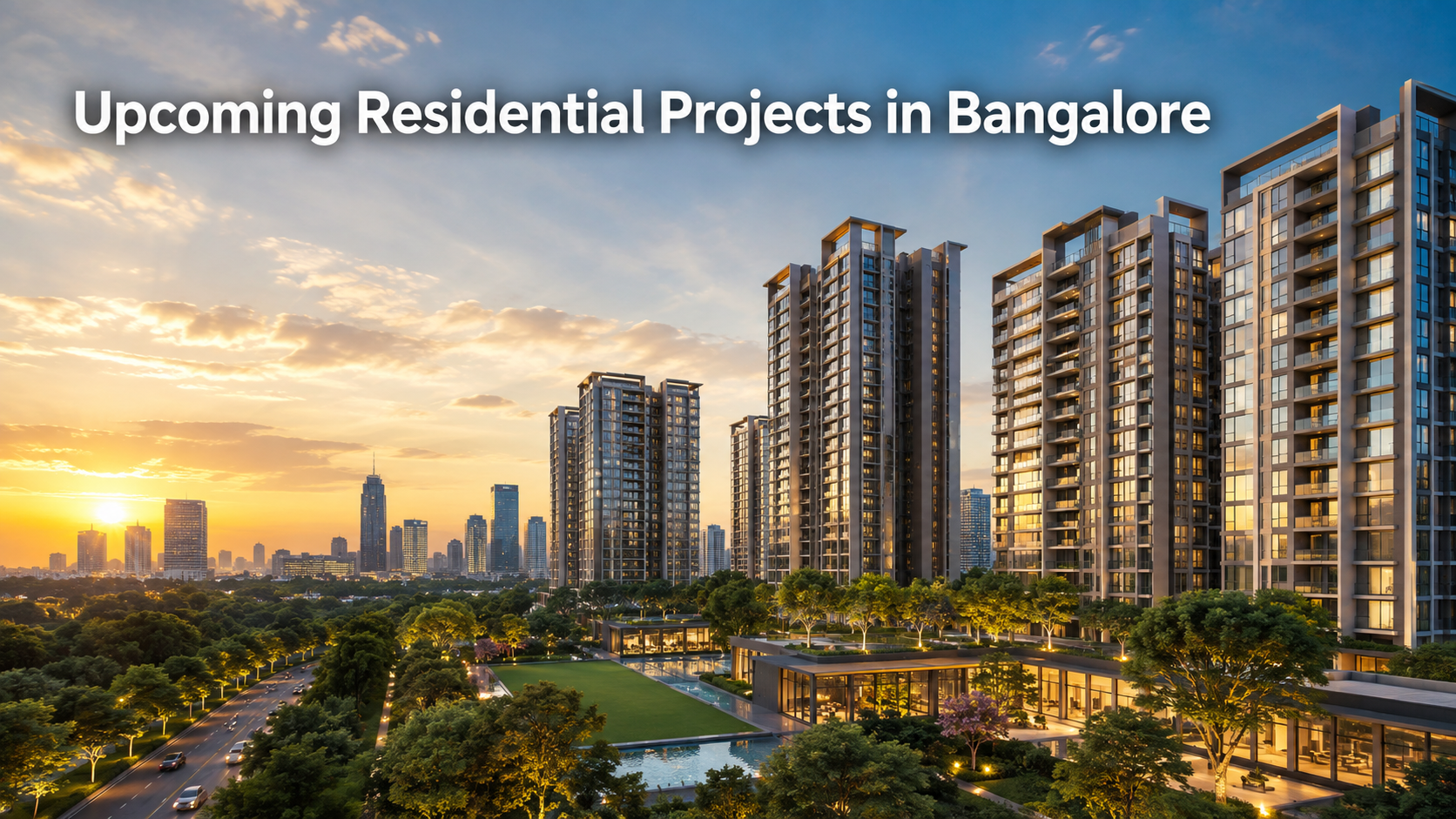
Buyers comparing HSR with newer opportunities can also review Upcoming Residential Projects in Bangalore before deciding whether a mature location or an emerging corridor better matches their investment strategy.
Real Estate ROI in HSR Layout: What Does ROI Actually Mean?
Many investors use appreciation and ROI as if they are the same thing.
They are not.
Suppose an apartment is purchased for:
₹1.50 crore
and sold after several years for:
₹1.90 crore
Headline appreciation:
₹40 lakh.
But the investor may also have paid:
Registration
Brokerage
Interiors
Home-loan interest
Maintenance
Repairs
At the same time, the apartment may have generated rental income.
Therefore:
Total ROI = capital appreciation + net rental income – ownership and transaction costs
This is the more realistic way to calculate investment returns HSR Layout investors may achieve.
HSR Layout Property Market in 2026
The HSR property market contains multiple asset categories.
These include:
Multistorey apartments
Builder floors
Independent houses
Residential plots
Premium boutique apartments
Current 2026 market data shows that prices differ significantly by property type.
A broad Q2 2026 benchmark for multistorey apartments is around:
₹9,400 per sq. ft.
with a locality range roughly between:
₹7,800 and ₹11,000 per sq. ft.
Builder-floor averages can be higher, around the ₹11,500-per-sq.-ft. level.
However, individual premium resale properties and new luxury projects can command substantially higher rates.
This difference is important because HSR should never be analysed using only one locality-wide rate.
Why Different Sources Show Different HSR Property Prices
Investors may see one portal showing around:
₹9,000–₹10,000 per sq. ft.
while another shows averages above:
₹13,000 per sq. ft.
This does not necessarily mean one number is wrong.
Different databases can include different combinations of:
Apartments
Houses
Villas
Resale inventory
Premium sectors
HSR also has substantial micro-market variation.
For investment purposes, the best benchmark is:
recent comparable properties of the same type in the same sector.
Property Appreciation HSR Layout Investors Should Track
Property appreciation HSR Layout investors receive is influenced by several structural factors.
1. Limited core-area supply
HSR is largely developed.
Large new residential land parcels inside the traditional sectors are difficult to find.
This limits how much fresh housing can enter the core market.
2. Employment connectivity
HSR can serve professionals working across:
Koramangala
Bellandur
ORR
Electronic City
Sarjapur Road
This broad employment catchment supports both tenant and end-user demand.
3. Mature social infrastructure
The locality already has:
Schools
Hospitals
Parks
Restaurants
Retail
This makes HSR attractive without depending entirely on future infrastructure.
4. Family demand
Families often value established neighbourhoods because they provide predictable day-to-day living.
That creates strong end-user demand.
HSR Layout Historical Price Behaviour
HSR has already gone through significant repricing over the last several years.
This is important for investors because future expectations should not simply extrapolate earlier growth.
A mature market may continue to appreciate, but returns can become:
More moderate
More project-specific
More dependent on entry price
The investment approach in 2026 should therefore be:
buy quality, not just the locality name.
Sector-Level Price Differences
HSR sectors can behave differently.
Recent apartment-price references show examples such as:
Sector 1 around ₹10,000 per sq. ft. on some apartment datasets
Sector 7 close to ₹9,700–₹9,800 per sq. ft.
Other property datasets can show substantially higher asking rates depending on stock quality and property type.
For investors, this means two homes only a few kilometres apart can have very different valuations.
Sector 1 Investment Profile
Sector 1 can appeal to investors because of:
Koramangala-side access
Established residential roads
Strong tenant demand
Well-located apartments can command a premium.
However, investors should check:
Building age
Parking
Water
Road noise
before paying a sector premium.
Sector 2 Investment Profile
Sector 2 has a strong residential character and premium positioning.
It can attract:
Families
Senior professionals
Long-term tenants
For investors, low-density properties with good parking can hold strong resale appeal.
Sector 7 Investment Profile
Sector 7 provides connectivity toward:
Hosur Road
Electronic City-side routes
Apartment pricing can sometimes remain more accessible than premium HSR pockets.
This can improve rental-yield mathematics if rent remains competitive.
Rental Demand and Real Estate ROI in HSR Layout
Rental demand is one of HSR’s biggest investment strengths.
The tenant pool includes:
Technology professionals
Startup employees
Corporate executives
Couples
Families
This diversity can reduce dependence on one tenant category.
Compare current value with total acquisition cost.
This gives a much more accurate picture of investment performance.
HSR Investment Budget Framework
Investment Budget
Potential Strategy
Under ₹1 Cr
Selected resale / compact property
₹1–₹1.5 Cr
2 BHK / selected older 3 BHK
₹1.5–₹2.5 Cr
Strong family 3 BHK / premium resale
₹2.5–₹4 Cr
Premium 3/4 BHK
₹4 Cr+
Luxury / boutique assets
The best percentage ROI does not necessarily come from the highest budget segment.
Investor Checklist
Metric
What to Track
Entry Price
Comparable HSR properties
Carpet Area
Actual usable space
Monthly Rent
Achievable market rent
Gross Yield
Rent ÷ acquisition price
Net Yield
After real expenses
Vacancy
Number of empty months
Maintenance
Annual cost
Location
Sector and road quality
Employment
ORR/Koramangala/E-City access
Parking
Tenant and resale requirement
Water
Long-term reliability
Resale
Future buyer pool
Supply
Nearby new projects
Holding Period
Medium to long term
Who Should Consider Property Investment in HSR Layout?
HSR can suit:
Long-term residential investors
Rental-income investors
Bengaluru professionals
Investors seeking mature-locality exposure
Buyers considering future self-use
It can be especially suitable for investors seeking stability rather than purely speculative gains.
Who Should Be More Selective?
HSR may be less suitable for:
Buyers seeking very low entry prices
Short-term property flippers
Investors expecting unusually high rental yields
Buyers paying extreme premiums for new launches
The market is mature, so valuation discipline is essential.
2026 Investment Outlook for HSR Layout
HSR Layout continues to have strong underlying fundamentals in 2026.
Current apartment-market benchmarks indicate a Q2 average around ₹9,400 per sq. ft. for multistorey apartments, while builder-floor and premium property categories can be considerably higher.
The broader market also shows significant sector and property-type variation.
For investors, this creates both opportunity and risk.
The opportunity is that HSR has:
Existing tenant demand
Established infrastructure
Limited core supply
Strong resale audience
The risk is paying too much because of the locality name.
Investors should therefore avoid asking:
“Will HSR appreciate?”
A more useful question is:
“Am I buying this specific HSR property at a price that allows a reasonable future return?”
Buyers comparing multiple asset types can also review apartments in Bangalore to compare HSR with Sarjapur Road, Whitefield, Bellandur and other major residential markets.
For locality-specific inventory, investors can explore projects in HSR Layout before shortlisting individual properties.
Final Outlook: Real Estate ROI in HSR Layout
The case for real estate ROI in HSR Layout in 2026 is built on a combination of:
Mature tenant demand
Employment connectivity
Limited core supply
Family appeal
Resale liquidity
Long-term scarcity
HSR is not primarily a speculative early-stage investment market anymore.
Its strength lies in owning a useful residential asset in a location where people already want to live.
For rental-focused investors, efficient 2 BHK apartments can offer:
Lower entry cost
Broad tenant demand
Better percentage yield
For balanced long-term investors, 3 BHK homes can provide:
Family rental demand
Higher absolute rent
Strong resale appeal
Premium apartments can also perform well, but their returns depend more heavily on scarcity and capital appreciation.
The most important investment rule is therefore:
Do not buy HSR only because HSR is a strong locality.
Investors who track these factors consistently will have a much clearer picture of actual returns than those focusing only on headline property appreciation.
FAQs About Real Estate ROI in HSR Layout
Is HSR Layout good for real estate investment in 2026?
HSR Layout can be attractive for long-term investment because it combines mature infrastructure, strong tenant demand, employment connectivity and limited core-area residential supply.
What is the average property price in HSR Layout?
Q2 2026 data for multistorey apartments places the average around ₹9,400 per sq. ft., although pricing varies significantly by sector, property type and building quality.
What rental yield can HSR Layout property generate?
A sensibly purchased mainstream apartment can be evaluated using an illustrative gross rental-yield range of around 3%–4%. Actual net yield will be lower after maintenance, vacancy and other costs.
Is a 2 BHK good for investment in HSR Layout?
Yes. A well-priced 2 BHK can offer a lower acquisition cost, strong professional tenant demand and broad resale liquidity.
Is a 3 BHK better for long-term investment?
A 3 BHK can provide strong family rental demand, longer tenant stays and good resale appeal, making it suitable for balanced long-term investors.
Are new projects better investments than resale homes in HSR?
Not necessarily. New projects offer modern amenities, while well-located resale properties can provide lower entry prices, immediate rent and prime core-HSR locations.
What is the biggest investment advantage of HSR Layout?
Its biggest strength is the combination of employment access, mature social infrastructure, tenant demand and limited fresh supply inside core HSR.
What is the biggest ROI risk in HSR Layout?
Overpaying is one of the biggest risks. A high entry price can reduce both rental yield and future appreciation returns.
Should investors consider the wider HSR catchment?
Yes, but wider-catchment projects should be valued according to their actual location rather than automatically using core-HSR pricing.
How long should investors hold property in HSR Layout?
HSR is generally better suited to a medium-to-long-term holding period, often around 5–10 years, allowing investors to combine rental income with potential capital appreciation.

 By bangaloreupcomingproject