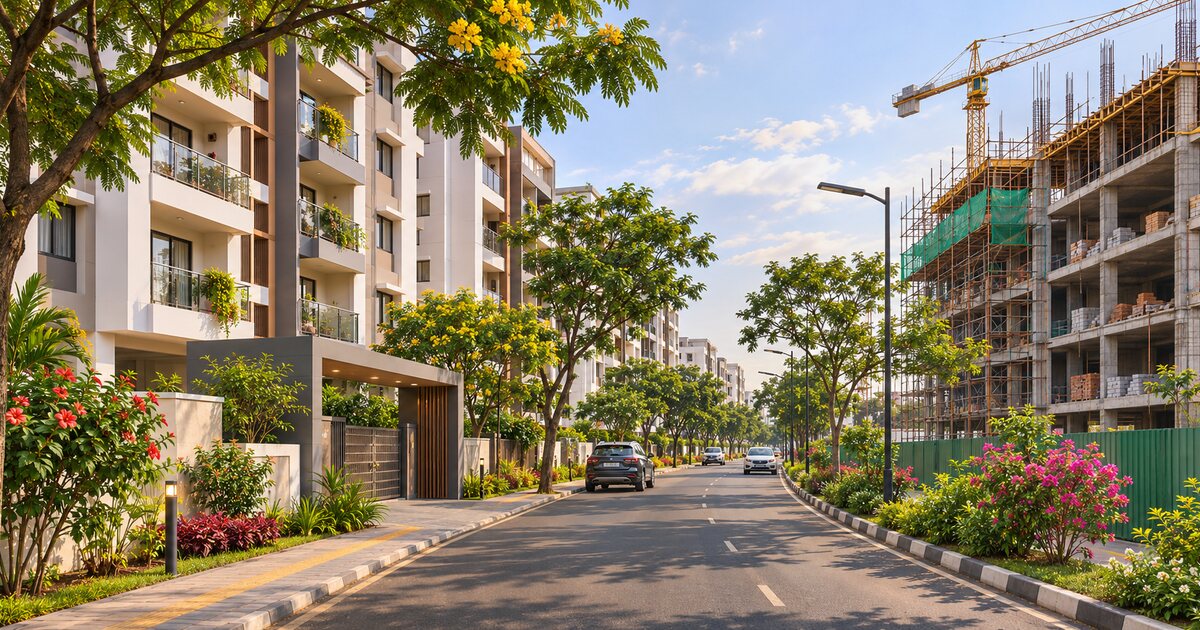
When comparing Hoskote apartment projects, start with the date your household actually needs to move. A ready home lets you inspect the specific flat and its building. An under-construction home lets you compare layouts earlier, but requires closer checks on the phase, payment schedule and handover documents. This guide shows how to compare both on the same basis.
*Price and availability are accurate at the time of publishing. Verified by Property Specialists.
What to inspect in ready apartments in Hoskote
Start with the exact apartment the seller has offered. Ask for the tower, floor, unit number and orientation before visiting. A building can look attractive from the entrance while the home itself faces a service area or is close to the lift landing. Walk into every room and make a note of the light, ventilation and noise. If you work from home, stand where your desk would go and check whether there is a nearby outlet and enough space to take a call without blocking the room. Return at another time if the first visit gives you an incomplete impression.
Continue the inspection outside the flat. Walk the route from the parking bay to the lift and check which entrance you would use with groceries, a stroller or luggage. Ask how visitors park and whether the allotted bay is marked in the paperwork. During the day, see how the lifts, common lighting, water supply and security operate. If the building is occupied, ask how maintenance requests are recorded and how often residents get an update. A working gym or clubhouse is easy to see on a tour, while noise from the pump room or a tight parking turn takes a deliberate check.
For a ready apartment on or near Old Madras Road, set your map pin at the gate you will actually use. Drive or ride to one routine destination at the hour it matters to you. A weekday office commute and a Saturday viewing tell you different things. Notice whether you have to make a long turn before joining the main road, and whether a cab can stop comfortably outside the entrance. If children will use a school bus, check the pickup point and the walk to it. Time a grocery or pharmacy trip as well so your shortlist reflects everyday errands as much as the office commute.
Ask the seller for the documents that establish whether the specific building can be occupied and which dues apply to the unit. If the seller describes the unit as ready, ask for the current applicable occupancy documentation instead of relying on the listing label. For a resale, request the latest maintenance statement and clarify how outstanding payments and handover of keys would be handled. Keep a separate line in your budget for repairs or appliances you can already see are needed. After the visit, write down your likely move-in week and what could delay it. That gives you a useful comparison against a new apartment whose completion depends on a future handover.
How to compare under-construction projects and ready homes
For a building still under construction, ask for the registered phase, the specific tower and the plan for your unit. A site visit can show the progress of some blocks while your own tower is at a different stage. Ask which parts of the site you can see safely and when the photos of your tower were taken. Check whether the access road, parking area and shared amenities in the brochure belong to the same phase as the apartment. A written handover timeline for the unit is more useful to your household planning than a general date quoted for the township.
Use the comparison table as a starting shortlist. It combines reported ready options with apartment profiles listed under construction so you can ask similar questions on both sides of the decision. Pricing references come from public project profiles and are indicative only. They can reflect different configurations or earlier offers, and their area figures can use different definitions. Verify current availability and request a quote for the exact unit before using a figure in your budget. The RERA references shown for two projects are published project-profile references. Confirm the number and phase in the Karnataka registry for the home you are considering.
Project and developer
Location
BHK and reported size
Stage and indicative price
Possession and RERA reference
BCD Emprasa · BCD Group
Kambalipura, off Old Madras Road
1–2 BHK · approx. 692–1,100 sq ft
Listed ready · ₹30 lakh reference
Check unit occupancy and applicable phase records
Sapthagiri Sampada · Sapthagiri Builders
Hoskote
2–3 BHK · 996–1,413 sq ft
Listed ready · ₹65.74 lakh reference
December 2025 reported · confirm current unit and phase records
Sanjeevini Aarna · Sanjeevini Group
Dandupalya, Whitefield–Hoskote Road
2–3 BHK · 940–1,679 sq ft across configurations
Listed under construction · ₹70.6 lakh reference
September 2027 reported · PRM/KA/RERA/1250/304/PR/170524/006887
Aakriti Emerald · Aakriti Developers
Nisarga Layout, Hoskote
2–4 BHK · 1,040–1,780 sq ft
Listed under construction · ₹84.2 lakh reference
August 2028 expected · PRM/KA/RERA/1250/304/PR/160925/008096
Triaxis Splendour Plus · Triaxis Builders
Dandupalya, Old Madras Road
2–3 BHK · 774–956 sq ft across configurations
Listed under construction · ₹65.8 lakh reference
Confirm possession and applicable RERA reference for the phase
Published apartment-profile references checked in November 2026. Confirm the area basis and request a current, unit-specific quotation.
The ready options illustrate why a starting price alone can lead to the wrong comparison. A one-bedroom headline offer and a two-bedroom quotation may serve very different households, even in the same corridor. Start by matching the number of rooms and the documented carpet area. Then compare whether the quoted home has a functional kitchen, a usable second bedroom and enough storage. Where a plan shows a balcony or utility area separately, keep that measurement in a separate column of your notes. Ask whether any smaller configuration is actually available if the advertised number seems unusually low for your shortlist.
For the homes under construction, look at how a delay would change your plans. If you have to renew a lease or pay for another move, estimate that cost separately. Ask what written milestone triggers each payment and when the seller will issue a dated statement. If a marketing date differs from a phase record or a draft agreement, ask the seller to explain the difference in writing. Save the cost sheet and the drawing with their issue dates so you can check whether anything has changed at your next visit. As you browse the under-construction directory, compare the time you can realistically wait with the move-in dates for the ready units you inspected. The shortlist should leave you with options you can afford even if your preferred timing changes.
Build a Hoskote shortlist around the full cost and move-in date
Create a simple comparison with one column for each unit you would actually consider. At the top record the project, tower, floor, configuration and quote date. Under that, write the quoted apartment price and ask for each additional item to appear separately. Parking, floor premiums, deposits and advance maintenance can change the amount due at different stages. Ask which items are included and who collects each payment. Keep transaction charges and home setup expenses separate so that a seller quotation and your household budget remain easy to reconcile. If a charge is still unclear, leave a note to check it rather than replacing it with a guess.
Next, map the dates you control against the dates the seller gives you. If you plan to vacate a rental, write down the notice period and the earliest week you could move. Add any overlap you need for cleaning, furniture or school arrangements. For a ready unit, ask how soon you can inspect it again and what has to happen before keys are handed over. For an under-construction unit, ask when the developer expects to offer a snag inspection and how you will be informed about any revision to the schedule. Plan how you would handle one extra period of rent if your dates do not line up.
Check the floor plan again after you have the price and dates in writing. Measure your biggest items of furniture before the visit if you can. Use the wall lengths and door positions for the unit you were offered. An apartment that looks spacious in photographs may have limited space around a dining table after you allow for circulation. If you will use a balcony for laundry or plants, ask about exposure and drainage. For a household that cares about quiet, note the location of shared walls, lift shafts and common seating areas. Record the issues that would affect your routine and the ones you could solve with a modest change.
Finally, give each unit a practical reason to stay on the shortlist. One may be easier to move into because you have already checked the actual home and route. Another may suit a longer timeline because the layout works better for your household and the payment dates are manageable. Keep a short list of unanswered questions beside each option and give the seller a chance to respond in writing. Before taking a booking decision, compare the latest dated documents against your original notes. If the quoted home, handover date or total cost has changed, run the comparison again using the revised details. That last check keeps your decision tied to the apartment you can actually buy.
Test the actual routes from Hoskote to your regular destinations
Set aside one visit for the surroundings instead of trying to fit every check into a sales appointment. Start at the project gate and travel to the destination that shapes your week. For one household that may be an office in Whitefield, for another it may be a school, a clinic, or a relative’s home. Save the route you actually use and note the time you reached the gate, how long it took to join the main road, and where progress slowed. Compare the routes on a day that resembles your schedule so an unusually quiet or busy trip does not become your only reference.
Look at the final stretch separately. It is easy to compare two map estimates and overlook the distance between a drop-off point and the building. Walk the last few hundred metres where it is practical and safe to do so. Note crossings, gaps in the footpath, lighting, and places where water or road works could interrupt your route. If you rely on app-based rides, check where a driver can stop and whether there is enough space to wait off the carriageway. A small inconvenience can matter more when it occurs on every school morning or every late return from work.
Repeat the exercise with a second destination. Start from the same entrance and check a trip you would make on a typical weekend, or an errand that another member of your household handles. Ask whether deliveries use the residential gate or a different entrance. For a project under construction, ask the representative to show the future resident gate on the phase plan and use the current public road during your visit. Record any proposed access separately from the access you could actually inspect. Use today’s travel pattern for budgeting your time, then revisit the comparison if the access changes.
Bring both visits into your shortlist by writing a sentence for each development about the easiest daily trip and the most awkward one. Include the person in your household who would make each trip and the time window you tested. If one project works better for the commute and another is better for everyday errands, compare how often those journeys occur. Someone working from home several days a week may place more weight on a reliable school pickup or an easy walk to local services. Keep the route notes beside the unit layout and quote. They help you decide whether a modest price difference buys a routine your household will find noticeably easier.
Record the exact gate pin and the date and time of the trip.
Test one regular journey and one everyday errand.
Keep future access proposals separate from roads you used.
Check phase records and handover evidence before you commit
Build a small folder for each flat you are considering. Put the written offer first and label it with the project name, phase, tower, floor and unit number. Give the seller a chance to confirm those identifiers together, since a brochure can describe more than one block and a sales chart can change between visits. Keep the latest copy alongside older quotes, clearly labelled by date. When a sales representative sends a revised plan, ask which revision applies to the offered home. The point of the folder is that you can trace every important claim back to a document that names the same apartment.
For an apartment under construction, request the applicable phase registration details and compare the phase name and planned dates with the record available for that phase. If a number is shared verbally, ask for it in writing before drawing a conclusion from it. Check how the seller describes the possession date, the readiness of common services, and the timing for the building entrance and lifts. These can be discussed separately during a sales visit. Ask which parts appear in the proposed agreement and whether the parking allocation or common facility access is documented. Save any dated progress update and ask which tower it shows.
For a ready home, request the occupancy documents applicable to the offered building and ask which phase and block they cover. If the seller is an existing owner, ask for records identifying the apartment and for the latest available statement of outstanding building dues. Clarify who is expected to settle any open bills and when that will happen. Check whether keys, access cards, parking access and any included fixtures are part of the handover. Write down which items you physically observed and which were described to you. This distinction is especially helpful if you visit several homes on the same day and remember the features of the wrong flat.
Put any conflicting information in a separate list. A difference between the sales sheet and the agreement, a changed tower allocation, or a possession month without a clear source is a question to resolve before making plans around it. Ask the seller for a written explanation and a copy you can retain. If the records are unclear or the purchase depends on a legal interpretation, use an independent property professional to review the actual paperwork for the offered unit. Keep unresolved items visible when you compare the flats again. A project can remain interesting while you wait for a document, but your shortlist should show what you still need to establish before treating that home as a realistic move.
Match the project, phase, tower and unit across records.
Ask which document supports the possession or occupancy status.
Record conflicts and obtain written clarification.
Compare usable living space before paying for a larger configuration
Read the floor plan as if you were already using the apartment. Start at the front door and trace the route you would take with groceries, then from the bedrooms to the bathrooms and from the kitchen to the utility area. Mark tight turns, doors that swing into furniture space, and passages that take up a meaningful share of the plan. If you are comparing a ready flat and a home under construction, use a measured visit for the first and the dimensioned drawing for the second. Ask for the plan that matches the precise unit on the offer, especially if a tower has mirrored layouts or different corner units.
Then list the pieces of furniture you need to fit. Measure the bed, dining table, sofa and desk, including the clearance needed to open drawers or pull out chairs. For a second bedroom that doubles as a home office, try laying out the bed and desk at the same time. A drawing can look generous until you account for wardrobes and inward-opening doors. Mark power outlets where you already know you will need them. Ask where the router or connection point is likely to sit and whether the layout leaves a quiet spot for calls. Give each apartment a note about the rooms that work straight away and the ones that would need changes.
Check the area basis before comparing the advertised numbers. Record the figure named in the unit documents and keep any quoted balcony or utility space on a separate line. If two sellers give a size using different labels, ask for comparable measurements before treating the larger number as evidence of more room. A longer balcony may be valuable for a household that uses it every day. Another family may prefer more clear space at the dining table or a separate utility area with access from the kitchen. Think in terms of specific routines and keep the dimensions that affect those routines in your notes.
Visit the flat or review the drawing with one other person if possible. Ask them to trace their own typical morning while you trace yours. It can reveal conflicts near the bathroom or kitchen that do not appear when comparing room counts alone. Where you can stand inside the flat, check orientation and observe how the windows open, which rooms face another block, and where you would hang laundry. When you only have drawings, list the questions you want answered during a later inspection. Bring those results into the final comparison by writing one advantage and one compromise for each layout tied to how you would use the home each day.
Confirm that the drawing matches the tower and unit.
Compare the same area basis across offers.
Measure furniture and leave room for doors and circulation.
Use two realistic move-in scenarios to make the final comparison
Before making a final shortlist, write down two move-in scenarios for every apartment. The first uses the date you can reasonably plan around if the unit and documents are ready on time. The second should allow for a delay that would affect your household, such as another rental period, postponed furniture delivery, or changing a planned school transfer. Give both scenarios dates you can explain. A ready unit can still take time if paperwork or handover items are outstanding. For a flat under construction, use the appropriate phase records and written offer as your basis and record the remaining dependencies in the same place.
Put the expenses in the month you expect to pay them. The purchase quote is one part of the decision, and the timing of each payment matters when you are also paying for a move or an existing home. Keep rent overlap, temporary storage, household setup and routine maintenance separate from the amount quoted for the apartment. Ask which costs you can confirm now and which depend on a future inspection or a revised offer. This monthly view is useful even without an exact number for every expense. It shows where several payments could fall together and where you may need a clearer schedule before deciding.
Then compare each home against three priorities you can describe plainly. One family may need to be settled before a school term, may want a small study, and may value an easier daily drive. Another may be able to wait longer and want a kitchen that works better for several people. Use the visits, documents and floor plan to assign a reason to each priority. If an apartment only looks attractive because of a headline price that no longer matches the unit on offer, return to the current quote. If a flat works for the budget but does not work for the people who will live there, record the compromise explicitly.
Before contacting the final sellers, collect the last questions from everyone who will use the home. Ask for a current quote and the documents attached to that offer, then compare what you receive with your earlier folder. Update your move-in scenarios if the unit, dates or price have changed. Decide which apartment you would revisit if your preferred option fell through, and write down why it is still viable. The result should be a short list of actual homes with a clear next action beside each. When you reach that point, you can compare a ready Hoskote flat and one still being built by what they mean for your schedule, living space and household budget.
Set a realistic date and a delay scenario for each unit.
Put expected costs in the month they would fall due.
Keep one viable backup option with a clear next step.

 By bangaloreupcomingproject